
Wood
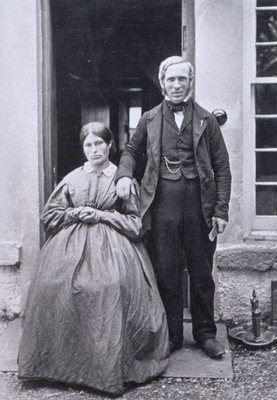
‘The Carpenter and his Wife’, Alexander McCallum Webster, ca. 1867
This photograph of Mr and Mrs McInnes was taken by Alexander McCallum Webster at the Invercreran Estate in Argyll in the late 1860s. The photograph, which is captioned ‘The Carpenter and his Wife’ forms part of the ‘Our Glen’ photograph album held as part of the National Records Scotland.
Alexander McCallum Webster (1838-1879) was an enthusiastic amateur photographer who captured this portrait of Mr and Mrs McInnes as part of a series of photographs documenting those who lived and worked on the estate in the late 1860s. The series includes photographs of Webster’s family and other estate workers. It shows a range of jobs and professions that say something of the labour involved in running an estate the size of Invercreran. The album includes photographs of the road mender, a shepherd, a dairy maid and two women bracken cutters, also the ‘brochar’ - thought to be the estate foxhunter. Alexander’s grandmother, Mrs Margaret McCallum, lived at the estate and she also features in the album pictured with younger members of her family.
The ruler in Mr McInnes’s hand is indicative of his trade as the estate carpenter. It was not unusual for family estates to employ resident carpenters to maintain and repair the numerous structures, fixtures and fittings that made up an estate’s domestic and working buildings. Photographs of tradesmen and street-sellers were a common genre in Victorian photography, though notably, many of the ‘Our Glen’ estate workers appear elderly, even those employed to carry out manual jobs. This could be indicative of their long service on the estate though the 1860s was also a time of great mobility for young Scottish men who had new opportunities to leave the country for work in Glasgow’s factories or in other towns and cities. Young Duncan Cameron, the Herd Boy in the ‘Our Glen’ series, is later recorded as working as a clerk in a mercantile house - a sign of changing times.
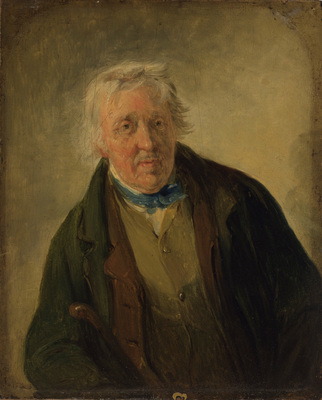
Matthew Hardie, violin maker in Edinburgh, 1822
Matthew Hardie was a celebrated violin maker, sometimes known as the ‘Scottish Stradivari’. He was born in Jedburgh in 1754, the son of a clock maker and trained as a joiner before a spell in the army and then a shift to musical instrument making. He soon focussed his energies on violin and fiddle making, with music for this instrument much in vogue on the concert stage and among players of Scottish tunes. He also repaired old instruments, or used the wood from old instruments to fashion new ones. He was based in the Lawnmarket from 1790, shifting his business premises several times within the vicinity and later relocating to Calton Hill, which was a sort of culture quarter by the 1820s, associated with print sellers, artist suppliers and bookshops. His son and grandson followed him in the same trade with premises in nearby Shakespeare Square. Hardie made very good copies of celebrated violins such as the Alday Stradivarius, which had been played in Edinburgh in 1803 by visiting virtuoso Paul Alday, who allowed him to study the construction of the seventeenth-century Italian instrument. He used choice woods imported from Europe and sold the finished violins to elite customers in Edinburgh and in London.
This portrait of Hardie was taken near the end of his life when he was an impoverished resident in the Edinburgh Charity Workhouse. It shows a bleary-eyed and dishevelled old man in a great coat, leaning against the back of a chair. He died a few years later aged 71 and was buried in Greyfriars kirk yard. The artist is Sir William Allan, Edinburgh born and apprentice trained as coach painter before turning his hand to anatomical drawing and then history painting, where he made his reputation. He worked in London and also visited Russia, but much of his career was conducted in Edinburgh